Wari La: The Ladakh Pass That Doesn't Appear on Most Motorcycle Itineraries
Last updated:
Key Facts About Wari La
| Fact | Detail |
|---|---|
| Elevation | 17,388 ft (5,300 m) |
| Location | Between Shyok Valley and Wari Valley, eastern Ladakh |
| Permit required | Restricted Area Permit (separate from standard Ladakh ILP) |
| Road condition | Loose gravel, no tarmac from Shyok side, minimal tarmac on descent |
| Traffic | Near-zero on most days |
| Best window | Late June to late September |
| Nearest fuel | Leh (120 km) or Nubra (80 km) |
Why This Route Matters
The standard motorcycle itinerary through Ladakh's Nubra Valley crosses Khardung La, descends to Hunder, does the dune walk and the double-humped camel photograph, and returns to Leh via the same road. On a July weekend, the Khardung La road handles 400-plus vehicles. The Wari La approach from the Shyok Valley handles, on most days, approximately zero.
Wari La sits on the far eastern edge of the Nubra district. It is the pass that connects the Shyok Valley to the Wari Valley and then down to the Manali-Leh highway near Upshi. Getting to it requires continuing past Hunder and Turtuk on the Shyok river road until the turn-off south toward the pass. The road past Turtuk is not well-maintained and is not sign-posted for Wari La in any useful way. The approach from the Shyok side climbs on a loose gravel track through terrain that feels increasingly remote as the altitude increases.
What the Crossing Is Actually Like
I have crossed Wari La twice — once in July and once in early September. The July crossing had fresh snowfall on the pass itself from two days prior, which had compressed into icy patches on the north-facing approach. The September crossing was drier but the gravel on the final 3 km before the pass was deep enough that the Himalayan's rear wheel spun on the steeper sections.
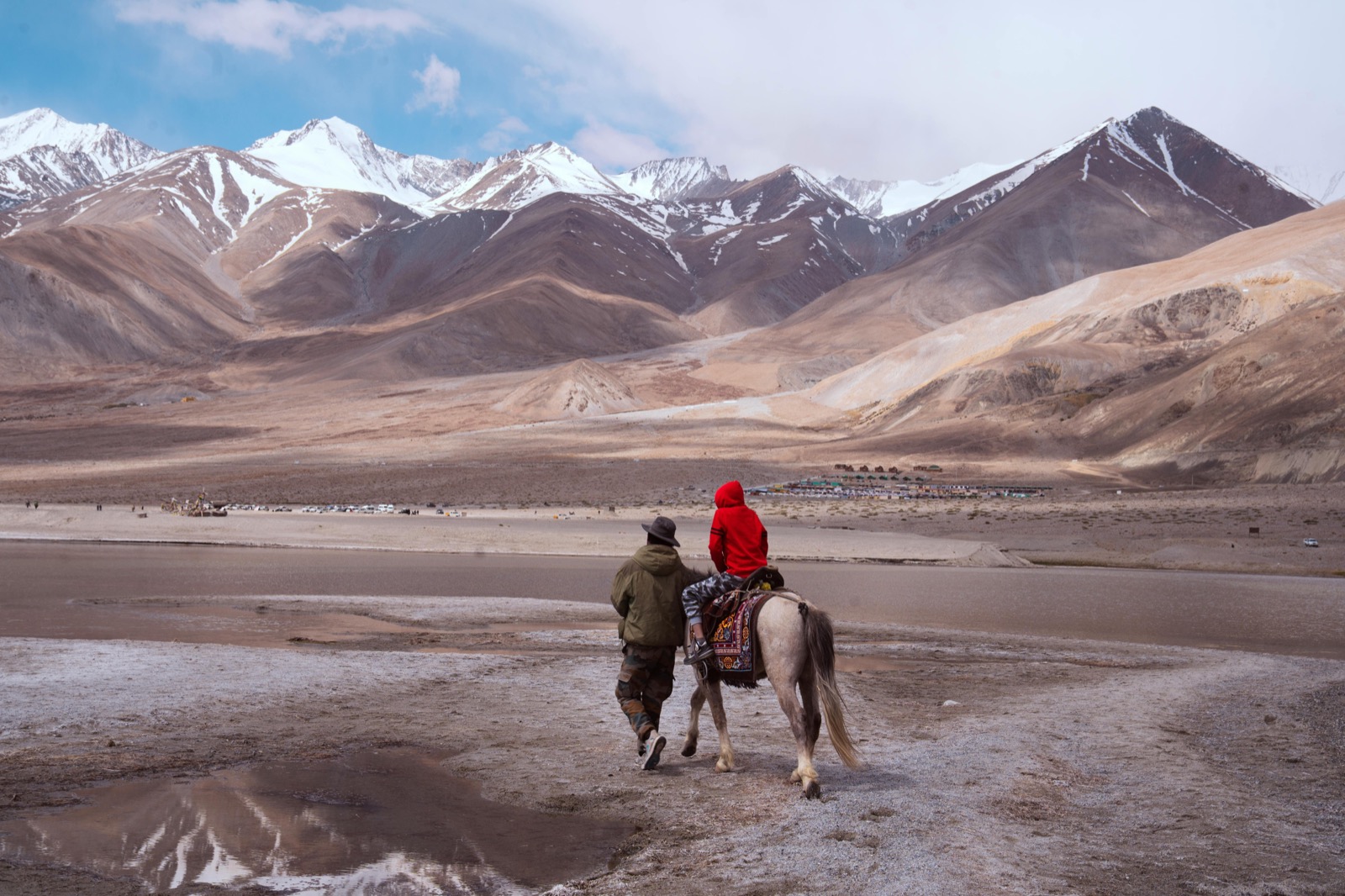
The view from the pass is different from Khardung La in a specific way. Khardung La is surrounded by other peaks of similar height and the view is compressed. From Wari La the Shyok Valley is visible far below to the north and the Wari Valley descends equally far to the south, and because there is no other traffic and no tea stall and no selfie queue, the quality of the silence is different. We stayed at the top for 45 minutes. In late July at 17,388 ft with no cloud cover, the UV at that altitude is significant — riders should factor sunscreen into their kit even when wearing full face protection.
The Permit Process
Wari La sits in the restricted inner zone of Ladakh that requires a permit beyond the standard Inner Line Permit. The paperwork process involves:
- Applying to the Deputy Commissioner's office in Leh at least 3 days in advance
- Specifying the exact route, vehicle registration, and rider passport details
- Receiving a permit valid for a specific window (usually 3–5 days)
- Carrying the permit through two checkpoints on the Shyok road
The permit processing is genuine — it is not a formality. Riders without the permit are turned back at the checkpoint beyond Turtuk. We apply for these permits as part of every expedition that includes this route and build the processing time into the planning calendar.
Combining Wari La with a Ladakh Expedition
Wari La works best as part of a Shyok Valley circuit that departs from Leh, goes over Khardung La to Nubra, continues east on the Shyok road to Turtuk and beyond, crosses Wari La south, and returns to Leh via the Manali-Leh highway. This circuit takes 4–5 days and avoids retracing the Khardung La on the return. It requires the restricted area permit for the Wari La section and appropriate fuel planning — there is no fuel between Turtuk and Upshi on this route.
The section from Wari La base down to the Manali-Leh highway is partly tarmac, partly river gravel, and crosses the Indus at Upshi bridge on paved road. The Upshi Monastery on the hill above the bridge is 600 years old and sees almost no visitors because the tourists on the highway below do not stop.
FAQs
Is Wari La rideable on a standard motorcycle?
Yes, with the right preparation. A Royal Enfield Himalayan 350 or 450 handles the crossing well. Loaded cruisers or large-displacement ADV bikes have more difficulty on the loose sections. The crossing is within reach of riders with solid off-road experience — it is not a technical extreme. The altitude is the main challenge, not the terrain.
Can you cross Wari La as a solo rider?
Technically yes. Practically, we do not recommend it. The permit process requires documentation, the approach section has no cell coverage, and a mechanical failure on the north face of Wari La with no other vehicles is a situation that benefits from a support vehicle within radio range.
When does Wari La open and close?
The pass typically opens in mid-June and closes by mid-October, dependent on snowfall. September is the most reliable month. July and August are good but can have afternoon weather that closes the pass temporarily. We check conditions in the week before any planned crossing.